From the Touge to the Circuit: The Unstoppable Evolution of Manabu “Max” Orido
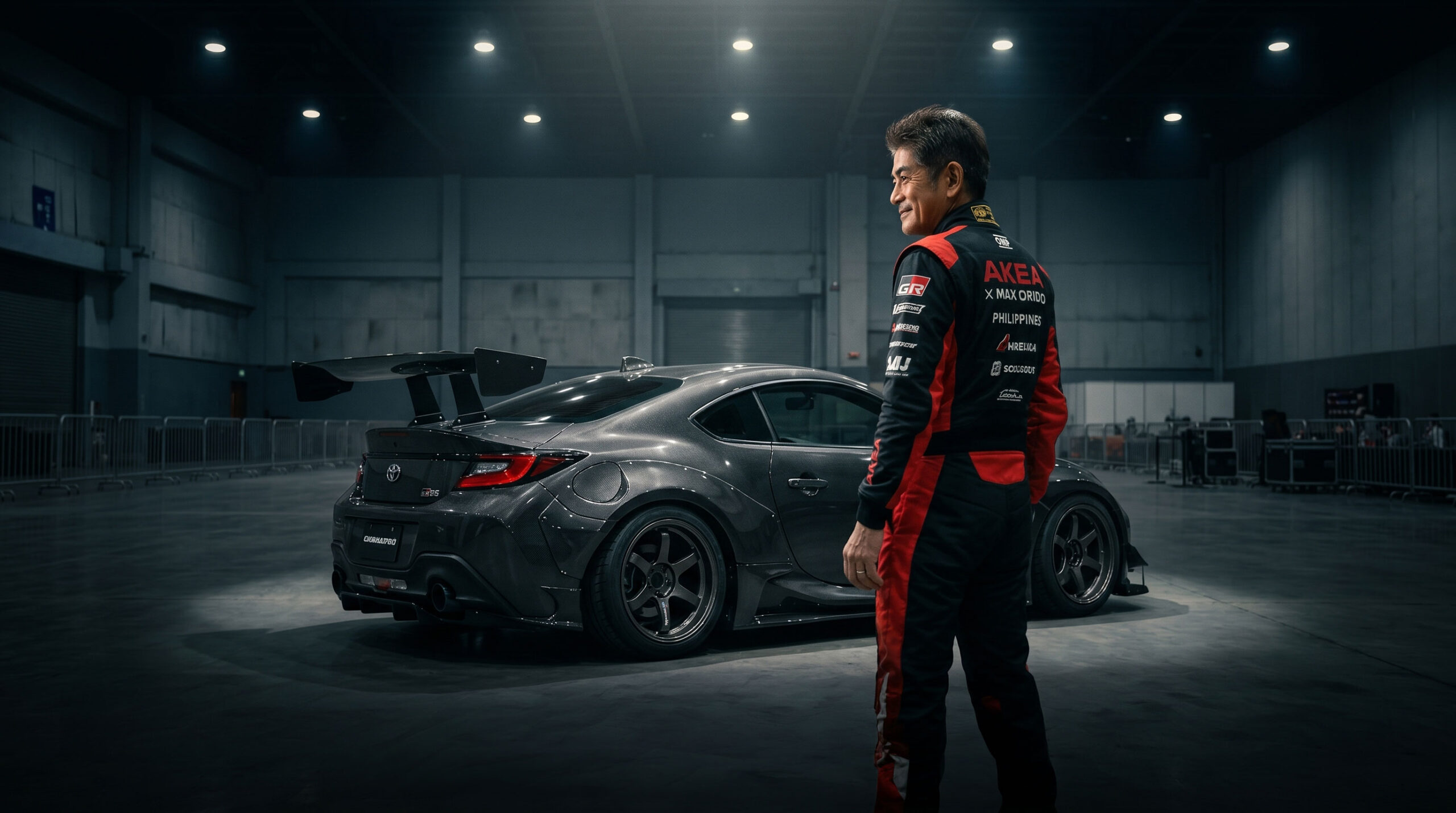
Mark your calendars, Manila. Clear your schedules and get your gear ready, because the legend is landing. On June 17, 2026, Manabu “Max” Orido is pulling up to the Auto Complex, and we at Two and Four are practically vibrating with excitement.
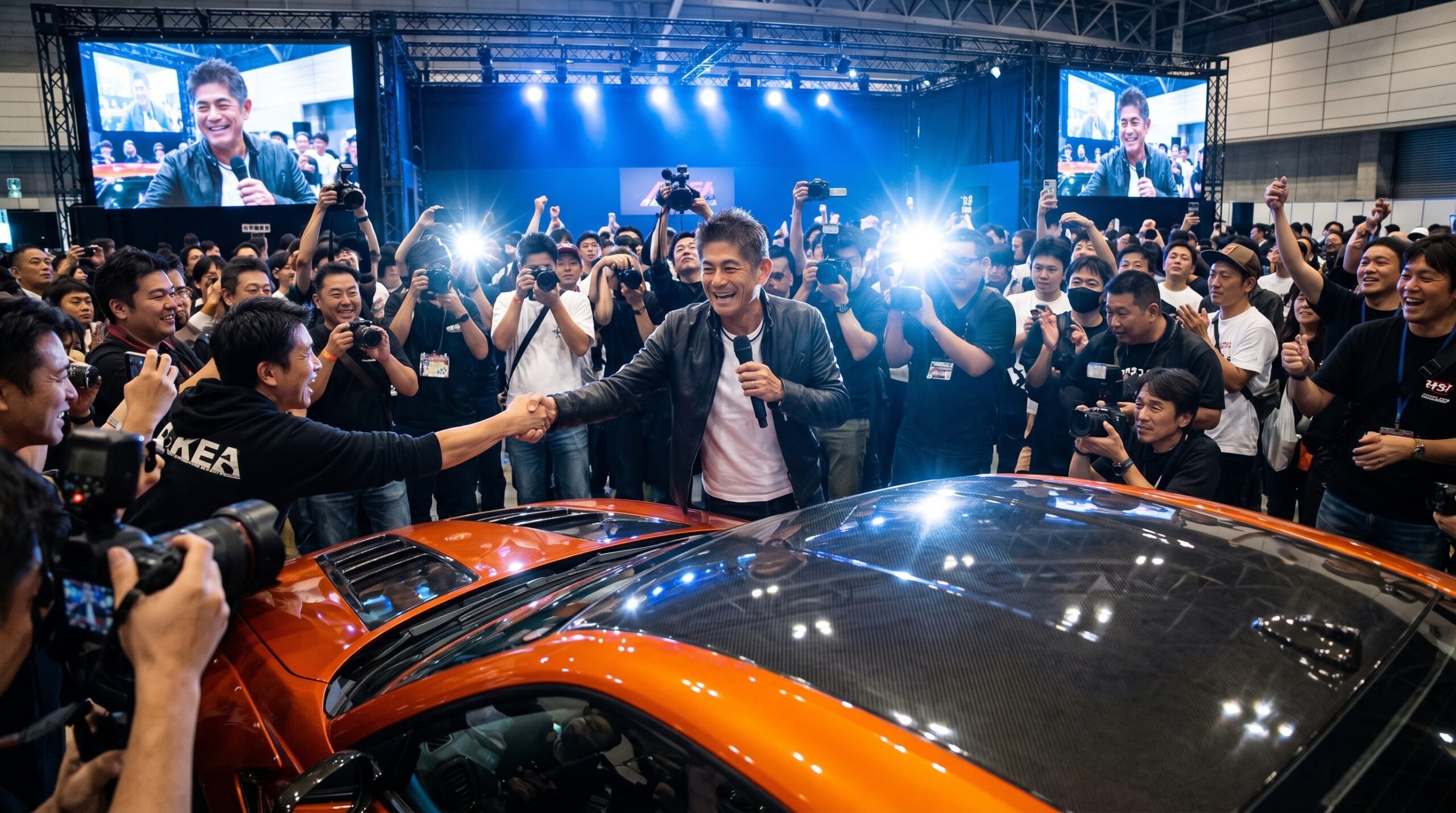
For the local JDM community, this isn’t just another celebrity driver appearance—this is a pilgrimage. Max Orido is automotive royalty. We are talking about the grassroots prodigy who conquered both the underground midnight runs and the absolute pinnacle of professional motorsport.
Forged on the Mountain
There are racing drivers who are forged in the sterile, high-budget environments of karting academies and factory simulators, and then there is Orido. He didn’t start with telemetry data or millionaire sponsors. He cut his teeth in the dead of night on the unforgiving mountain passes—the touge—of Chiba, Japan. Back in an era where street racing was about pure survival and earning respect the hard way, Orido learned vehicle dynamics by pitching cars completely sideways toward concrete barriers. He developed a preternatural sense of balance and car control that didn’t just earn him street cred; it made him a global household name.
His defining breakthrough arrived in 1990. Entering a drift contest organized by CARBOY magazine and sponsored by the Bandoh Chain of Commerce, Orido took the grand championship. That victory wasn’t just a shiny trophy for the shelf; it was his golden ticket out of the underground and straight into the professional paddock.
Conquering the Grip World
While many drift kings stay comfortably within the realm of oversteer, Orido proved his raw, untamed talent translated flawlessly to grip racing. He debuted in the Japanese Grand Touring Championship (JGTC) and immediately silenced any purists who viewed him as “just a street racer.”
In 1997, driving a Nissan Silvia for Racing Project Bandoh, he captured his first GT300 class championship. To prove it was absolutely no fluke, he secured a second GT300 title in 2009, this time piloting a Lexus IS350. His relentless adaptability even took him to the ultimate endurance stage in 2004, where he made his 24 Hours of Le Mans debut in a Porsche 911 GT3 RSR, securing an incredible second-place finish in the GT class.
The Architect of Modern Drifting
Despite all the grip racing glory, the man never abandoned his roots. When the D1 Grand Prix was inaugurated in 2000, formalizing drifting into a legitimate professional motorsport, Orido was right there sitting alongside Keiichi Tsuchiya as a founding judge. He helped shape the rules, the culture, and the sky-high standards of modern drifting we obsess over today.
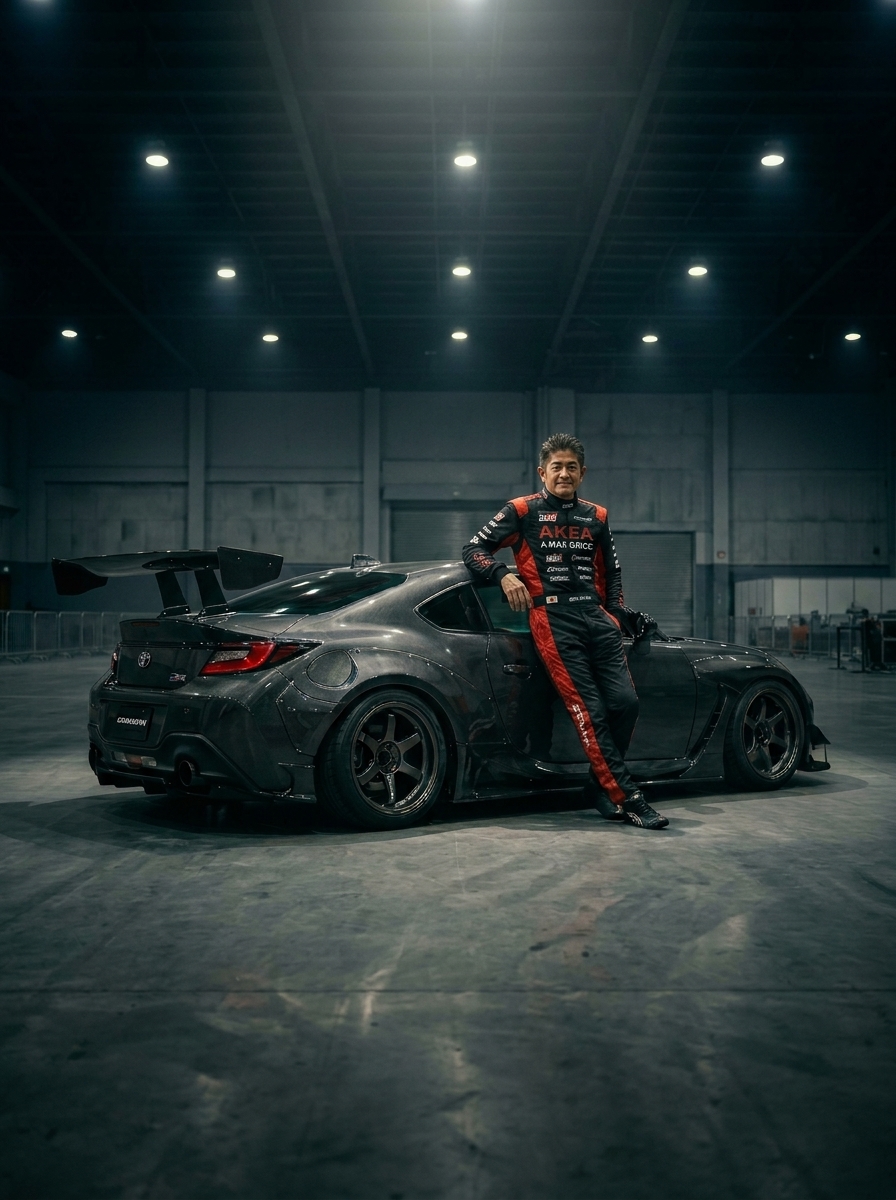
But sitting behind a judging desk wasn’t enough for a driver with gasoline in his veins. In 2005, he famously stepped down to get back behind the wheel as a competitor, eventually campaigning a raucous, ear-splitting V8-powered Toyota 86 that became an absolute crowd favorite and solidified his reputation as the ultimate showman.
The Legacy Continues
Today, Orido is so much more than a driver; he is a global ambassador for Japanese car culture. Through his legendary shop, MAX ORIDO Racing in Yokohama, and his investments in high-end sim racing facilities, he is still out there pushing the boundaries of automotive performance and driver training.
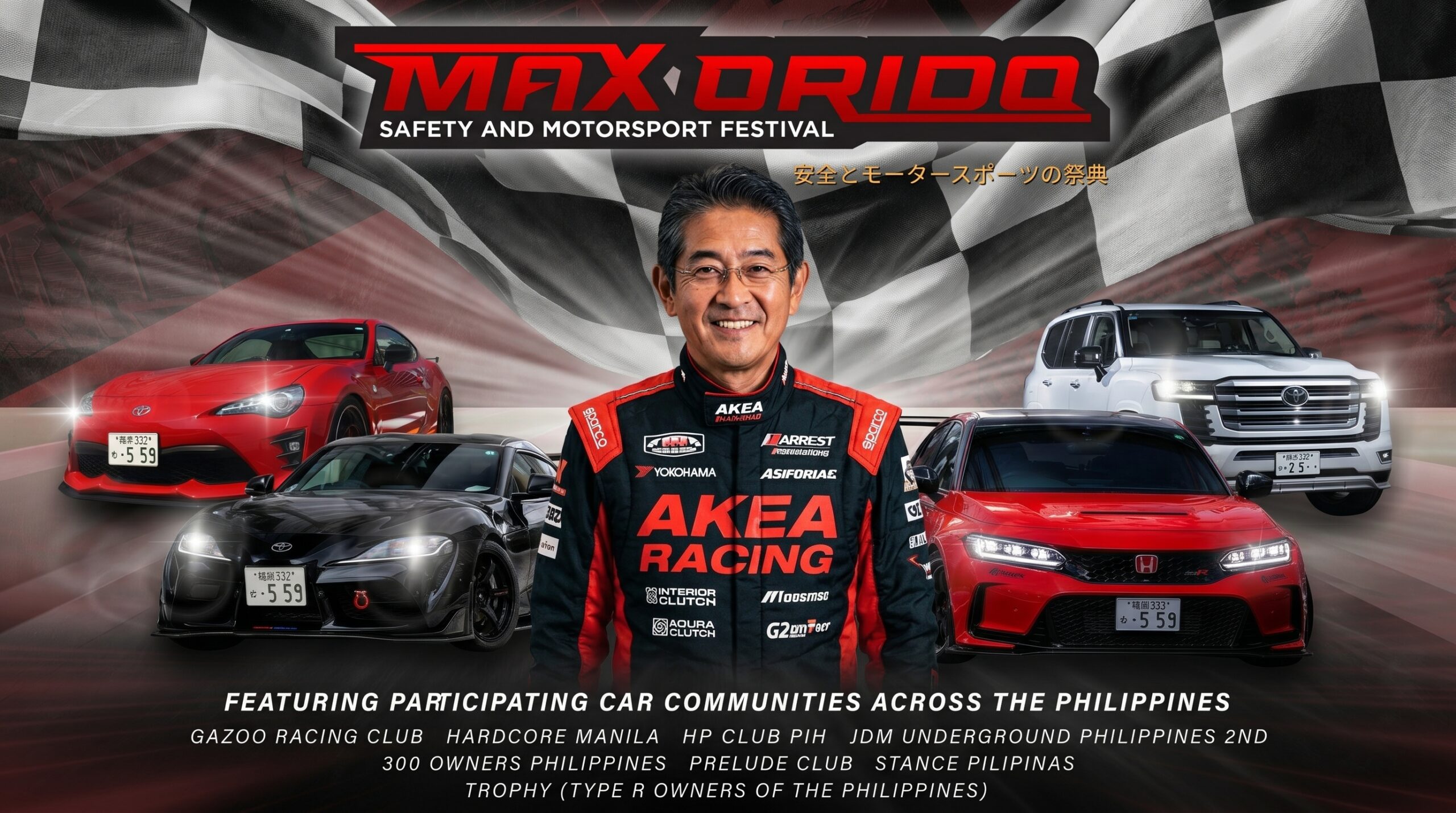
His visit to the Auto Complex this June isn’t just a celebrity appearance—it is a once-in-a-lifetime chance for Filipino enthusiasts to connect with a living legend. He is the ultimate proof that with enough raw talent, pure passion, and relentless tenacity, the streets can lead straight to the podium.
We at Two and Four will be right there in the crowd, screaming just as loud as the rest of you. See you at the Auto Complex!