
The middleweight cruiser category has seen a massive resurgence, pivoting away from heavy, chrome-laden V-twins toward agile, performance-oriented parallel-twins. Kawasaki has aggressively re-entered this space with the 2026 Eliminator 500, dropping the classic namesake onto a thoroughly modern architecture. Here is an objective breakdown of the platform’s mechanical and ergonomic systems.
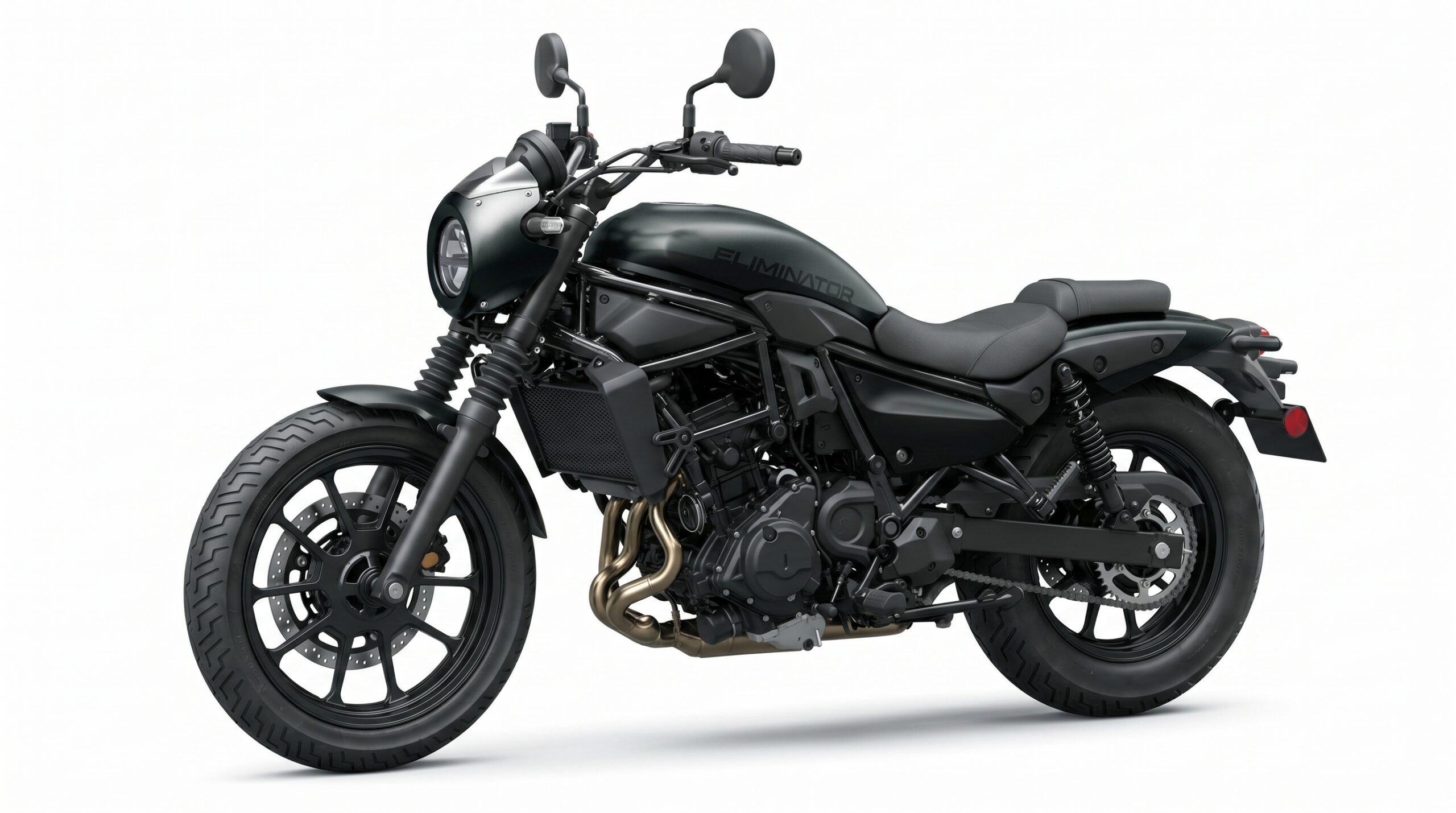
Powertrain and Delivery Instead of developing a new, low-revving cruiser engine from scratch, Kawasaki utilized a proven high-performance platform.
-
The Engine: The Eliminator is powered by a 451cc, liquid-cooled, DOHC parallel-twin engine, a displacement bump directly derived from their Ninja sportbike lineage but retuned specifically for urban tractability.
-
Performance Output: It delivers a healthy 52 horsepower and 42.6 Nm of torque. The engine tuning heavily emphasizes low-end and mid-range torque, providing immediate, predictable roll-on power for highway overtaking without needing to wring out the throttle.
-
Transmission: Power is managed by a 6-speed manual transmission equipped with an Assist and Slipper clutch. This significantly lightens the clutch lever pull during heavy stop-and-go traffic and prevents rear-wheel hop during rapid downshifting.
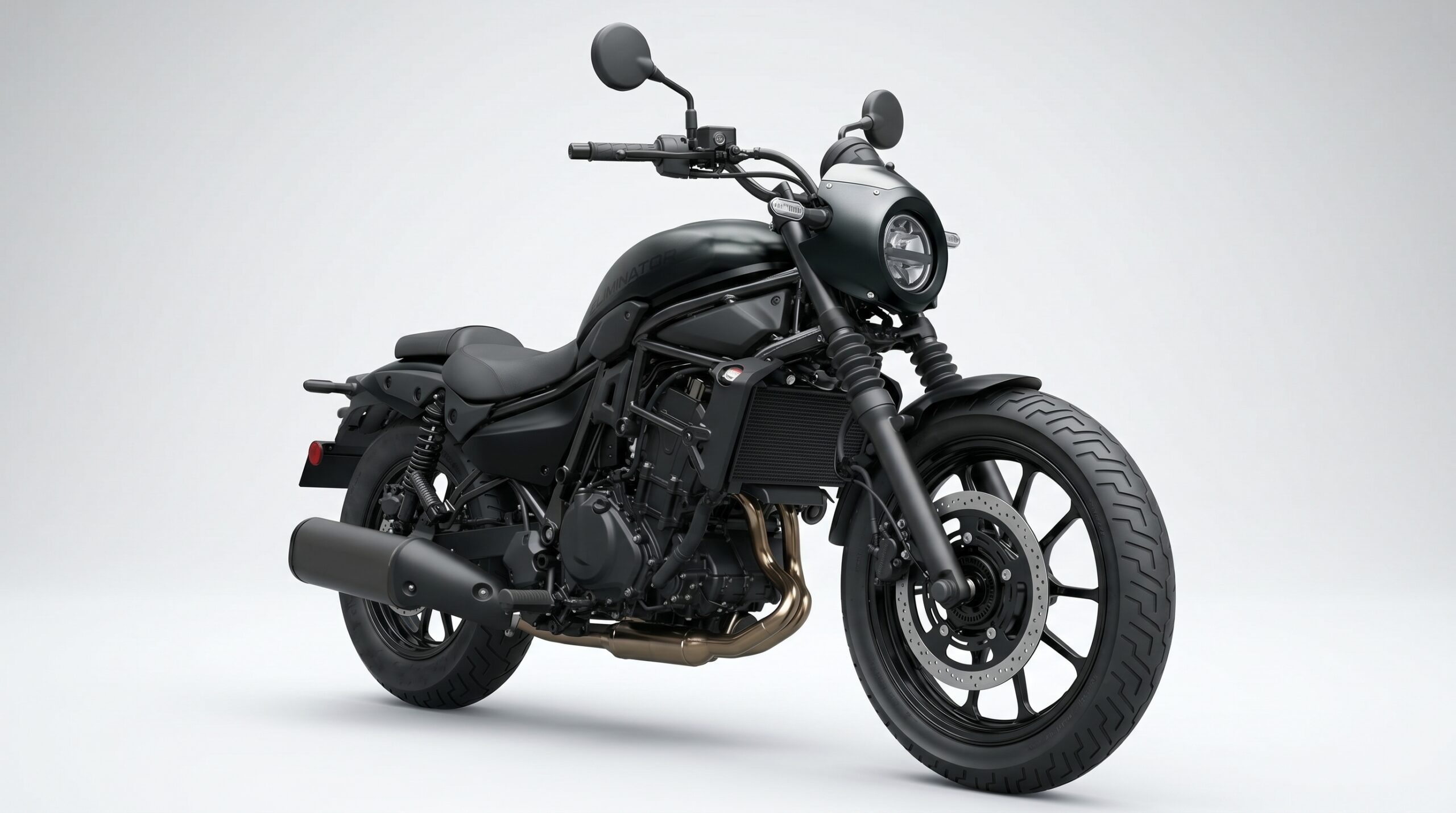
Chassis Architecture and Ergonomics The Eliminator departs from traditional heavy cruiser frames, utilizing sport-oriented construction to minimize mass.
-
The Frame: It relies on a high-tensile steel trellis frame, a design choice that keeps the kerb weight down to an exceptionally light 176 kg. This results in a power-to-weight ratio that makes the bike highly responsive during tight urban maneuvers.
-
Suspension Geometry: The front end utilizes 41mm telescopic forks, while the rear features a classic twin-shock setup optimized for straight-line stability and passenger comfort.
-
Rider Positioning: True to the cruiser ethos, it features a highly accessible 735mm seat height. Paired with mid-mounted footpegs rather than extreme forward controls, it creates a natural, upright riding triangle that reduces lower back fatigue on longer transit routes.
Telemetry and the SE Package The cockpit strips away analog bulk in favor of streamlined, digital instrumentation.
-
Instrumentation: Vehicle data is centralized in a single, compact circular LCD digital display. It provides clear readouts for the tachometer, gear position indicator, and fuel gauge, integrating seamless smartphone connectivity via Kawasaki’s Rideology application.
-
The SE Variant: For operators seeking expanded utility, the Eliminator SE variant comes factory-equipped with functional upgrades. This includes a compact headlight cowl for high-speed wind deflection, rubber fork boots for stanchion protection against trail debris, and an integrated, waterproof USB-C outlet mounted on the handlebars to power navigation devices.
Market Positioning Priced at ₱366,000 for the standard model and ₱386,400 for the SE variant, the 2026 Kawasaki Eliminator 500 offers a highly accessible but mechanically robust entry into the cruiser segment. By combining the aggressive styling of a low-slung street bike with the high-revving DNA of a sport bike engine, it delivers a modern, agile solution for the everyday rider.